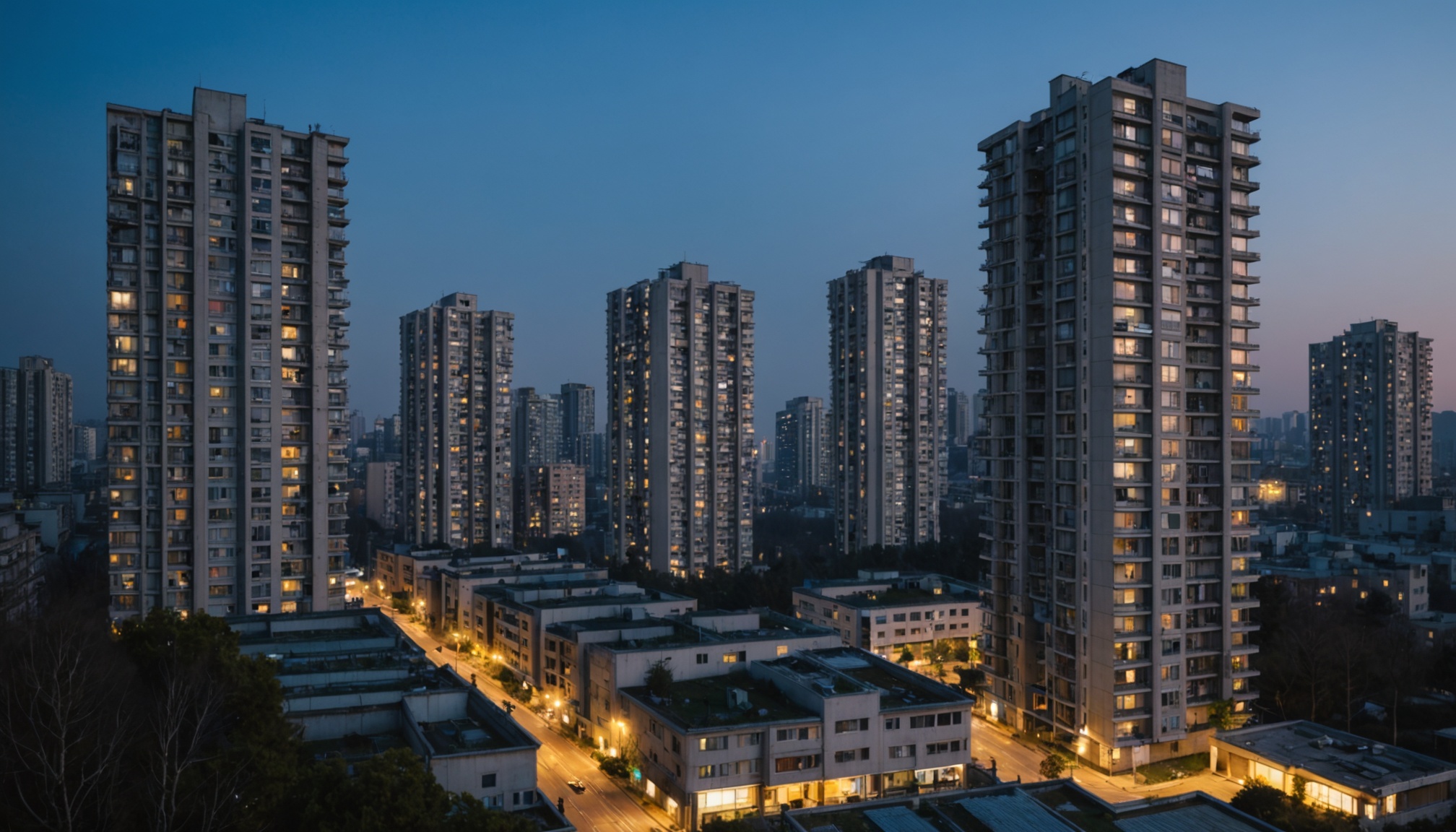
Win a unit supplied in a speculative overheating district (tugi-gwayeol jigu) or a price-capped development, and you cannot be selected as an occupant of any other sales-type housing for ten years from the winning date. The ban covers not just the winner but every member of the same household. This is the re-winning restriction in Article 54 of the Rules on Housing Supply, and the period splits into ten, seven, five, three or one year depending on the type, location and floor area of the unit won.
What suddenly widened the reach of that clause was October 15, 2025. On that day the government designated all 25 Seoul districts and 12 areas in Gyeonggi Province as speculative overheating districts and adjustment target areas. Twenty-one districts joined the four already designated, and the Gyeonggi list covered Gwacheon, Gwangmyeong, the Bundang, Sujeong and Jungwon districts of Seongnam, the Yeongtong, Jangan and Paldal districts of Suwon, Dongan district in Anyang, Suji district in Yongin, Uiwang and Hanam. Resale and subscription restrictions took effect from the date of the designation notice.
How the restriction period splits by unit type
Article 54(2) sets five brackets. Ten years for units supplied in speculative overheating districts and for price-capped housing, seven years for units in subscription-overheated areas, five years for land-lease housing and similar categories. Everything else divides again by floor area and by whether the site sits inside the Seoul metropolitan overconcentration control zone.
| Type of unit won | Restriction | Basis (Art. 54(2)) |
|---|---|---|
| Speculative overheating district · price-capped housing | 10 years | Item 1 |
| Subscription-overheated area | 7 years | Item 2 |
| Land-lease housing and similar | 5 years | Item 3 |
| Other · 85㎡ or less · overconcentration control zone | 5 years | Item 4 |
| Other · 85㎡ or less · outside that zone | 3 years | Item 4 |
| Other · above 85㎡ · overconcentration control zone | 3 years | Item 5 |
| Other · above 85㎡ · outside that zone | 1 year | Item 5 |
One principle rides on top of the table: when two or more periods apply, the longest one governs. A price-capped project inside a speculative overheating district triggers both clauses, but the result is a single ten-year ban.
The clock starts on the winning date — not the contract date, not move-in.
The five and seven years created by one October date
Designation is not retroactive, but anyone who wins after it takes effect falls straight under the ten-year clause. The same complex and the same floor area can carry completely different bans depending on whether the winners were announced before or after the notice. The 21 newly added Seoul districts had never been speculative overheating districts before that day, so earlier wins fell under the general rules. The table below applies the clauses directly to compute release dates.
| Case | Winner announcement | Clause applied | Restriction | Released |
|---|---|---|---|---|
| Newly designated Seoul district · 84㎡ | 2025.10.14 | Item 4 (control zone, ≤85㎡) | 5 years | 2030.10.14 |
| Newly designated Seoul district · 84㎡ | 2025.10.16 | Item 1 (overheating district) | 10 years | 2035.10.16 |
| Newly designated Seoul district · 101㎡ | 2025.10.14 | Item 5 (control zone, >85㎡) | 3 years | 2028.10.14 |
| Newly designated Seoul district · 101㎡ | 2025.10.16 | Item 1 (overheating district) | 10 years | 2035.10.16 |
| Non-metro, unregulated · 84㎡ | any date | Item 4 (outside zone) | 3 years | +3 years |
| Non-metro, unregulated · 101㎡ | any date | Item 5 (outside zone) | 1 year | +1 year |
Two days apart, an 84㎡ unit picks up five extra years and a 101㎡ unit seven. The gap widens with size because outside regulated areas larger units actually draw shorter bans. Designation erases that size-based tiering and flattens everything to ten years.
Price-capped projects start at ten years even in unregulated areas — which covers price-capped housing supplied on public land. Judging the restriction from the designation status alone will give the wrong answer.
The ban does not stop with you
The restriction applies to every member of the same household, not just the winner. A spouse registered at a separate address is still treated as the same household, and lineal ascendants and descendants listed on the couple's resident registration are covered too.
In practice the clause bites hardest through special supply. A household that wins one unit through the newlywed special supply enters the restriction period as a unit from that moment. If a parent later joins the household, or a child reaches adulthood and starts preparing an application of their own, a live restriction blocks the filing outright. Income limits and points tend to absorb all the attention; the eligibility side is covered separately in the piece on newlywed special supply income thresholds.
There is an exception. Even under a re-winning restriction, private-sector housing supplied outside speculative overheating and subscription-overheated areas remains open, provided no other subscription restriction applies. With regulated zones now covering all of Seoul, that exception effectively points outside the capital region.
Disqualified wins are a separate penalty
The restriction most often confused with this one is the penalty for a disqualified win. According to the Ministry of Government Legislation's plain-language legal service, an applicant whose win is cancelled for ineligibility cannot be selected for another unit for one year in the capital region, six months elsewhere and three months in designated contracting areas.
The triggers differ. The re-winning restriction attaches to a perfectly valid win that proceeds to contract; the disqualification penalty attaches when eligibility was miscalculated and the win was voided. Getting your points wrong costs a shorter ban but burns the entire round — and the calculations where errors cluster, dependants and years without a home, are laid out in the breakdown of the 84-point subscription scoring table.
What to check
- Every household member's past wins — spouse and lineal relatives on the resident registration included. A separately registered spouse still counts as the same household.
- The exact winning date — the clock runs from the winner announcement, not the contract. Your subscription history on Cheongyakhome shows it.
- Whether the area was regulated at the time — all of Seoul and 12 Gyeonggi areas have been speculative overheating districts since October 15, 2025. Earlier wins are computed by floor area and zone.
- Whether the price cap applied — a price-capped project means ten years even outside regulated areas. It is stated in the occupant recruitment notice.
- Whether two brackets overlap — if they do, only the longest applies.
- What you can still apply for — private housing in unregulated areas may remain open during a restriction, as long as nothing else disqualifies you.