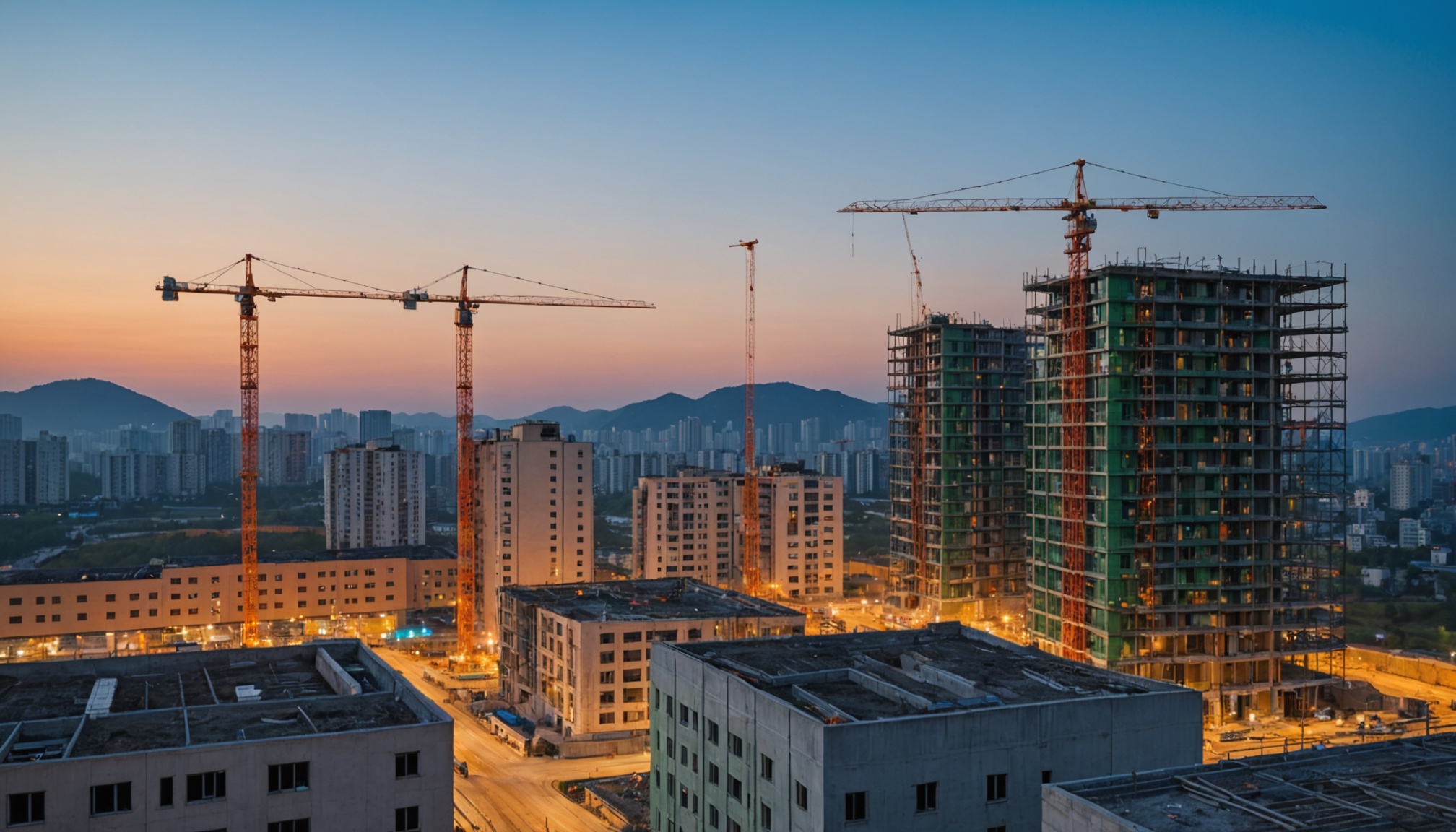
The base construction cost (gibonhyeong geonchukbi) used to calculate prices for apartments under Korea's price-cap system rose on September 15. For the standard reference case — buildings of 16 to 25 floors, units of 60 to 85㎡ exclusive area, above-ground portion — it climbed from 2,237,000 won per square meter to 2,328,000 won, a 4.07% increase. That is a gap of 91,000 won per square meter. Converted to a single 84㎡ apartment, the construction portion alone grows by roughly 10 million won. The sale price itself, however, does not rise by 4.07% — land cost and add-on costs are stacked on top of construction cost to set it.
What pushed the 4.07%
Most of the increase came from indirect construction costs. With the Public Procurement Service's "2026 indirect construction cost standards for cost calculation," announced in April, now reflected, indirect construction cost rose from 604,000 won to 663,000 won, up 9.77%. Within that, the indirect labor cost rate moved from 14.6% to 18.1% and other expenses from 6.0% to 6.9%. It is the government's push to expand safety investment across every stage of construction, arriving inside the cost-calculation standard.
| Item | Previous notice | Sept 15 notice | Change |
|---|---|---|---|
| Base construction cost (per ㎡) | 2,237,000 won | 2,328,000 won | +4.07% |
| Indirect construction cost | 604,000 won | 663,000 won | +9.77% |
| Indirect labor cost rate | 14.6% | 18.1% | +3.5%p |
| Other expenses rate | 6.0% | 6.9% | +0.9%p |
The figure is issued on a regular schedule twice a year, on March 1 and September 15. The 2,237,000 won baseline it replaced was itself set by an off-cycle notice on July 15 — meaning upward revisions have been stacking through this stretch.
How much more on an 84㎡ unit
The base cost is multiplied by supply area (exclusive area plus shared residential area), not exclusive area alone. At a 75% efficiency ratio, an 84㎡ exclusive unit has a supply area of 112㎡. Multiplying that by the 91,000 won per ㎡ increase produces the table below. Actual efficiency varies by complex — typically somewhere in the 70s or low 80s depending on tower versus slab layout and corridor type — so identical exclusive areas can produce different amounts.
| Exclusive area (㎡) | Supply area (㎡, 75% eff.) | Before (10k won) | After (10k won) | Increase (10k won) |
|---|---|---|---|---|
| 49 | 65.3 | 14,614 | 15,209 | 595 |
| 59 | 78.7 | 17,605 | 18,321 | 716 |
| 74 | 98.7 | 22,079 | 22,977 | 898 |
| 84 | 112.0 | 25,054 | 26,074 | 1,019 |
| 101 | 134.7 | 30,132 | 31,358 | 1,226 |
On the 84㎡ line, construction cost moves from 250.54 million won to 260.74 million won, an increase of 10.19 million. A 59㎡ unit gains 7.16 million and a 101㎡ unit 12.26 million. These are the published per-㎡ rates applied directly to supply area; a real sale price adds basement construction cost and various add-on costs separately.

The base construction cost is one slice of the sale price, not the whole of it — 4.07% does not become the price increase.
The sale price does not rise 4.07%
Under the price cap, a sale price is land cost plus construction cost plus add-on costs. A 4.07% rise in construction cost flows through only in proportion to construction's share of the total. Assuming a 600 million won apartment, the arithmetic splits like this.
| Construction share of price | Price increase (%) | On 600M won (10k won) |
|---|---|---|
| 30% | 1.22 | 733 |
| 40% | 1.63 | 977 |
| 50% | 2.04 | 1,221 |
| 60% | 2.44 | 1,465 |
The higher the land cost share — as in central Seoul — the smaller the effect on the final price; on public land sites where land is comparatively cheap, the effect is larger. The same notice therefore lands differently by region. Because a higher price also means a larger loan, it is worth rerunning the borrowing limit under stress DSR against several price scenarios.
Which complexes it applies to
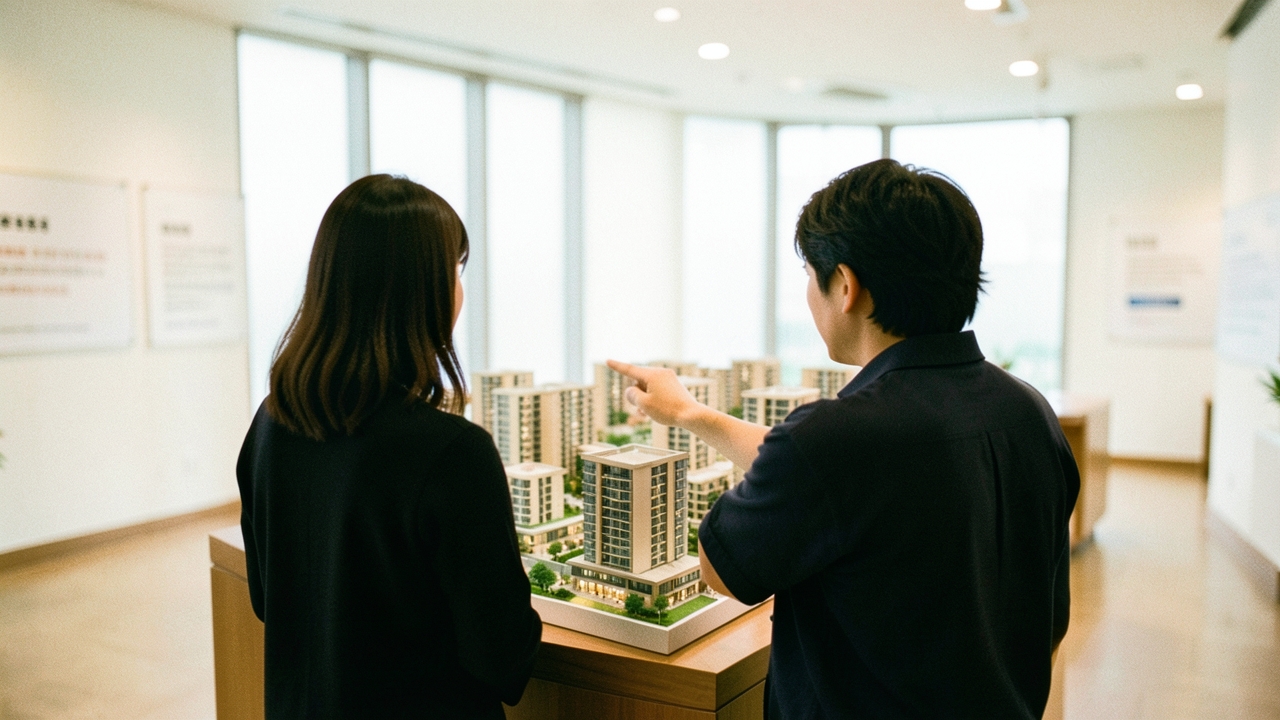
The revised figure applies to complexes filing for occupant recruitment approval on or after September 15. Complexes that already published their recruitment notice stay on the previous standard. The scope covers price-capped housing on public land and apartments in Seoul's Gangnam, Seocho, Songpa and Yongsan districts. Prices at complexes outside the cap are not directly tied to this notice.
For anyone preparing a cheongyak (housing subscription) application, the practical dividing line is whether a target complex filed its approval request before or after September 15. Recruitment notices break the price down into land cost, construction cost and add-on costs, so comparing two complexes line by line reveals more than comparing headline prices. Subscription account contributions and their deduction conditions are covered in the calculation of the housing subscription account income deduction.
What to check
- Whether your target complex filed for occupant recruitment approval before or after September 15 — it decides which notice applies
- The land cost, construction cost and add-on cost lines in the recruitment notice's price breakdown
- Whether the complex falls under the price cap at all (public land site or regulated district)
- Supply area versus exclusive area and the efficiency ratio — identical 84㎡ units with different supply areas carry different construction costs
- Whether another off-cycle notice lands before the next regular one on March 1