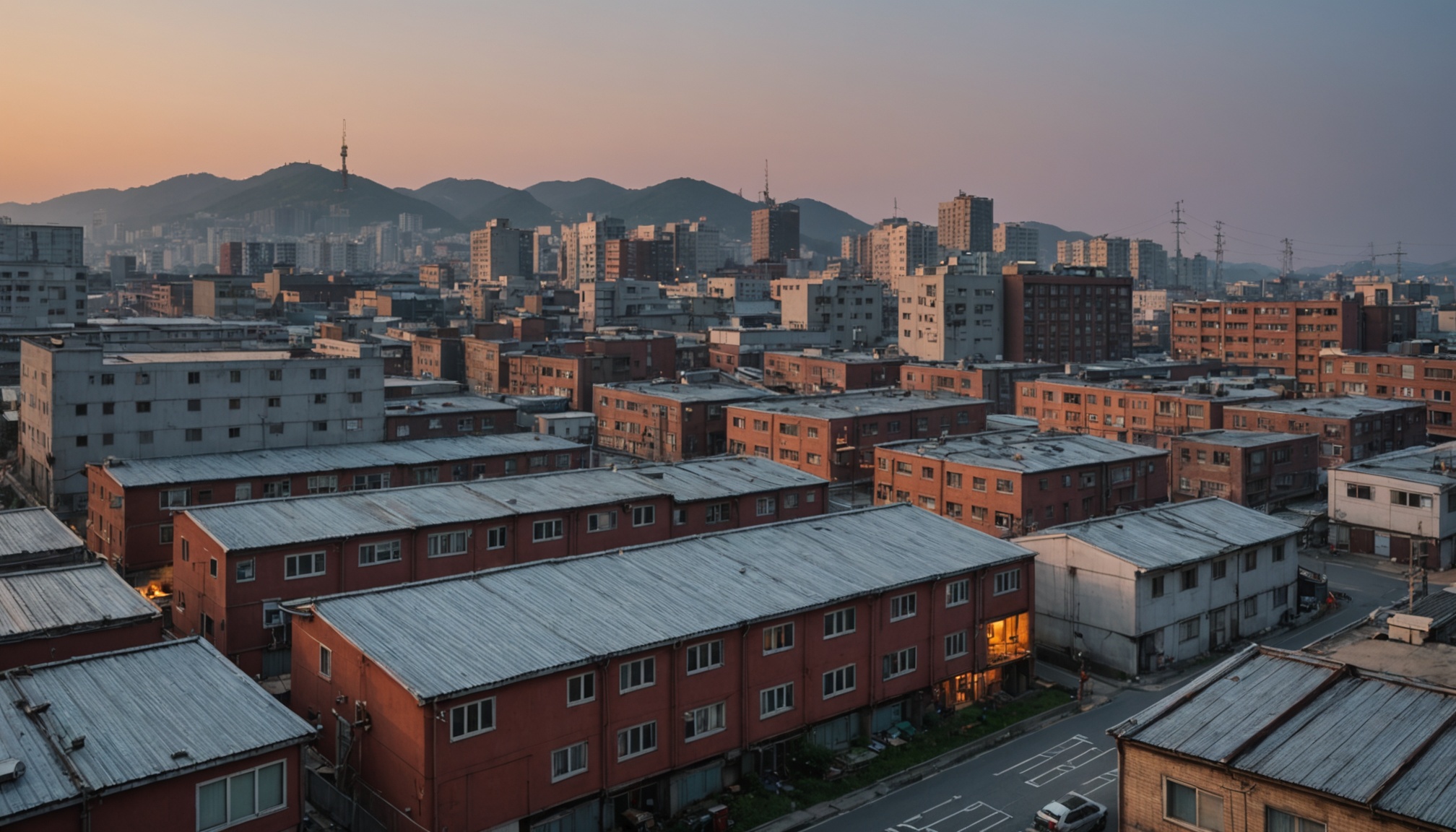
The maximum floor area ratio for apartment construction in Seoul's semi-industrial zones has risen from 250% to 400%. Two numbers define the conditions. A site of 3,000 square meters or more triggers a district unit plan requirement, and if factories occupy less than 10% of the area, apartments can be built without a district unit plan at all. As Herald Business reported, the Seoul urban planning ordinance amendment carrying these changes took effect on 27 March 2025.
Semi-industrial zones (jun-gongeop jiyeok, land zoned for light industry with limited residential use) cover a small share of Seoul but have long been slow to develop because their rules were tangled. The principle of preserving industrial capacity and the demand for housing supply collided on the same lots, and developers stalled at the first question of which route to take. This amendment essentially resolves that fork with a single threshold: a 10% factory share.

The 10% factory share splits the path in two
The backbone of the semi-industrial reform Seoul announced in November 2024 is simplification of categories. According to the city's own briefing, four development categories were consolidated into two: industrial-mixed for areas where factories occupy 10% or more, and residential-mixed for those below 10%. The label is the procedure.
A residential-mixed area — one where factories have effectively disappeared — can build apartments without preparing a district unit plan. Previously the presence of even one factory pulled the plan requirement along with it, so an entire procedural stage drops away. Industrial-mixed areas still require the plan, and the threshold for that requirement is now clearly set at sites of 3,000 square meters or more.
Freedom over development form changed too. Mixing industry and housing inside a single building used to be permitted only on sites under 10,000 square meters. Now, regardless of site size, the developer can choose between splitting the land and building separately, or combining uses in one structure. Larger sites often favored separating industrial facilities into their own block; that option is now open to smaller sites as well.
What conditions actually produce 400%
400% is not handed out automatically. Floor area ratio comes in three layers — base, permitted and maximum — and a project climbs toward the top only by meeting conditions such as public contributions or supplying rental housing. Laid side by side, before and after:
| FAR layer | Before | After | Change |
|---|---|---|---|
| Base FAR | 210% | 230% | +20%p |
| Permitted FAR | 230% | 250% | +20%p |
| Maximum FAR | 250% | 400% | +150%p |
Base and permitted each rose 20 percentage points while the maximum jumped 150, and that asymmetry defines the reform. What is granted unconditionally is modest; the large increment opens only to projects willing to carry public contributions. Publicly built rental housing and rental-type dormitories get 400%, while existing homes purchased by public housing operators are set at a base of 300%.
One more layer arrived on top. In September 2025 Seoul announced it would extend the statutory maximum FAR and the feasibility adjustment coefficient — until then applied only to residential zones — into semi-industrial zones. In the pilot case published on the Seoul Housing Portal, the Samhwan Dobong apartment complex moves from 250% to 343% FAR, growing from 660 to 993 units, with members' estimated contributions falling by an average of 170 million won. The feasibility adjustment coefficient grants more floor area precisely where land values are low and project economics are weakest.
400% is only the name of a ceiling. What a district actually receives is decided by what it can afford to give back in public contributions.
Applied to Changdong 608, how far does the unit count move
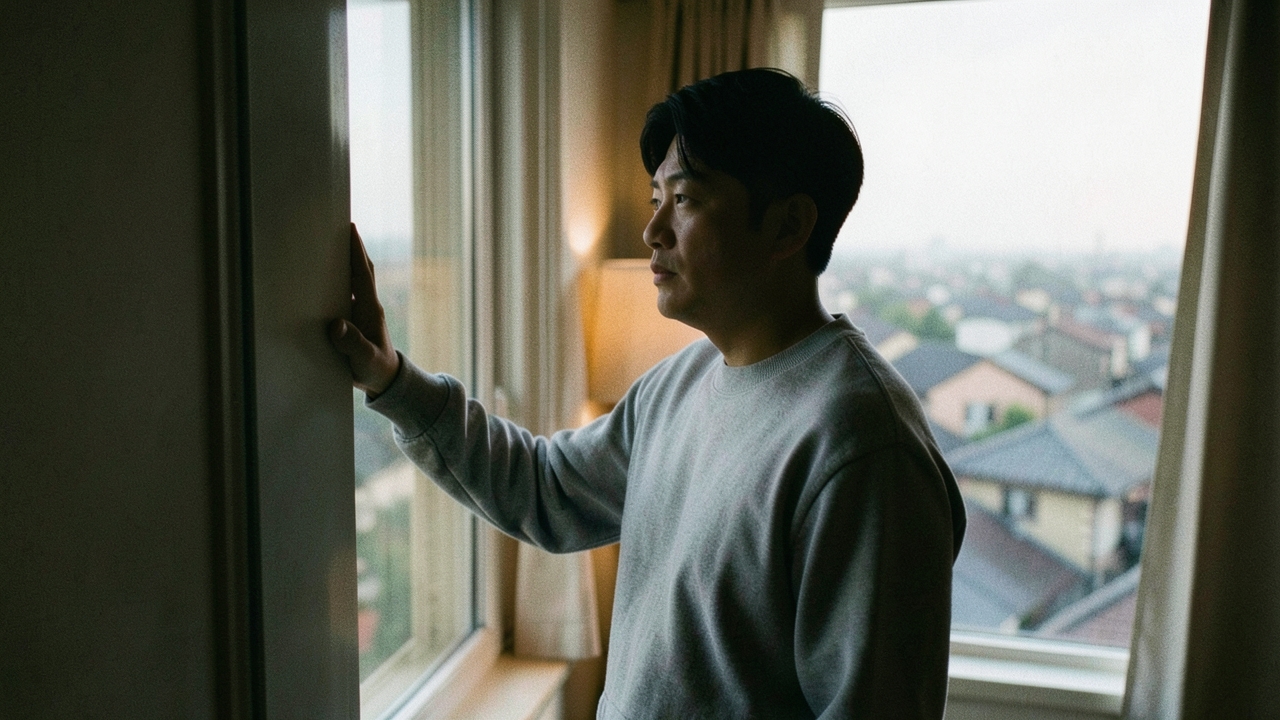
The fastest way to feel the size of a rule is to put numbers into a live district. According to Money Today, Dobong-gu is pursuing housing redevelopment across a 66,395.8 square meter semi-industrial area at Changdong 608. The site was selected in April 2026 as a candidate under the fast-track integrated planning programme, a consultancy for the improvement plan was appointed in August, and the kickoff briefing was held on 2 September. The study runs 24 months. More than 80% of the buildings are over 20 years old, and this is the first semi-industrial redevelopment pursued in Dobong-gu.
District area does not translate directly into buildable land, since roads, parks and other infrastructure come out first. The figures below assume infrastructure takes 30%, leaving a 46,477 square meter site, and use 110 square meters of supply area per home (equivalent to an 84 square meter exclusive-use unit) to derive above-ground floor area and unit counts by FAR. Actual plans shift with height limits, land donations and unit mix, so read this only as a sense of scale.
| Applied FAR | Site area (㎡) | Above-ground floor area (㎡) | Estimated units | vs. 250% |
|---|---|---|---|---|
| 250% (old maximum) | 46,477 | 116,193 | 1,056 | — |
| 343% (Samhwan Dobong case) | 46,477 | 159,416 | 1,449 | +393 |
| 400% (new maximum) | 46,477 | 185,908 | 1,690 | +634 |
On the same land, the ceiling alone swings the estimated unit count by 634 homes. If member households number around a thousand, the 250% case leaves almost nothing for general sale, while the 400% case yields more than 600 units of it. That is the difference in what members pay. For how those contributions get calculated, see how the proportional ratio and construction costs push member contributions up.
What to check
- The factory share of the district — below 10% and apartments proceed without a district unit plan. That single line moves the permitting timeline by years. Check the land use plan certificate and the district office's planning notices.
- The 3,000 square meter threshold — whether small lots can be assembled past it, and what procedures attach once they are.
- Permitted FAR, not the maximum — feasibility work is safer starting from 250% than from 400%. The 150 percentage points between them are the price of public contribution.
- Whether the feasibility adjustment coefficient applies — the lower the official land price, the larger the adjustment. Compare the published pilot cases against your district's land values.
- The improvement plan schedule — a 24-month study like Changdong 608's means two years just to district designation. Association formation and project approval follow after that.
- The form of the right you hold — inside a designated district, acquisition tax and housing-count treatment change with the stage of the project. Working through the tax difference between redevelopment occupancy rights and presale rights in advance speeds the decision.
Sources
- Seoul raises semi-industrial zone FAR to a maximum of 400% (Herald Business)
- 400% FAR and mixed development approved for southwest Seoul semi-industrial zones (Seoul Metropolitan Government)
- Statutory maximum FAR extended from residential to semi-industrial zones, up to 400% (Seoul Housing Portal)
- Dobong-gu launches its first semi-industrial zone housing redevelopment at Changdong 608 (Money Today)