
Korea's public reverse mortgage, jutaek yeongeum, is available to a couple where at least one spouse is 55 or older and their combined official assessed housing value (gongsi-gagyeok) is 1.2 billion won or less. Applications filed on or after 1 March 2026 fall under revised monthly payouts, and the upfront guarantee fee has dropped from 1.5% of home value to 1.0%. For the benchmark case the agency publishes — age 72, a 400 million won home — the monthly payment rose from 1,297,000 won to 1,338,000 won.
The age test only needs one spouse to clear it. If the husband is 60 but his wife has passed 55, the household qualifies. One further condition applies: at least one spouse must be a Korean national. These requirements are published by the Korea Housing Finance Corporation.
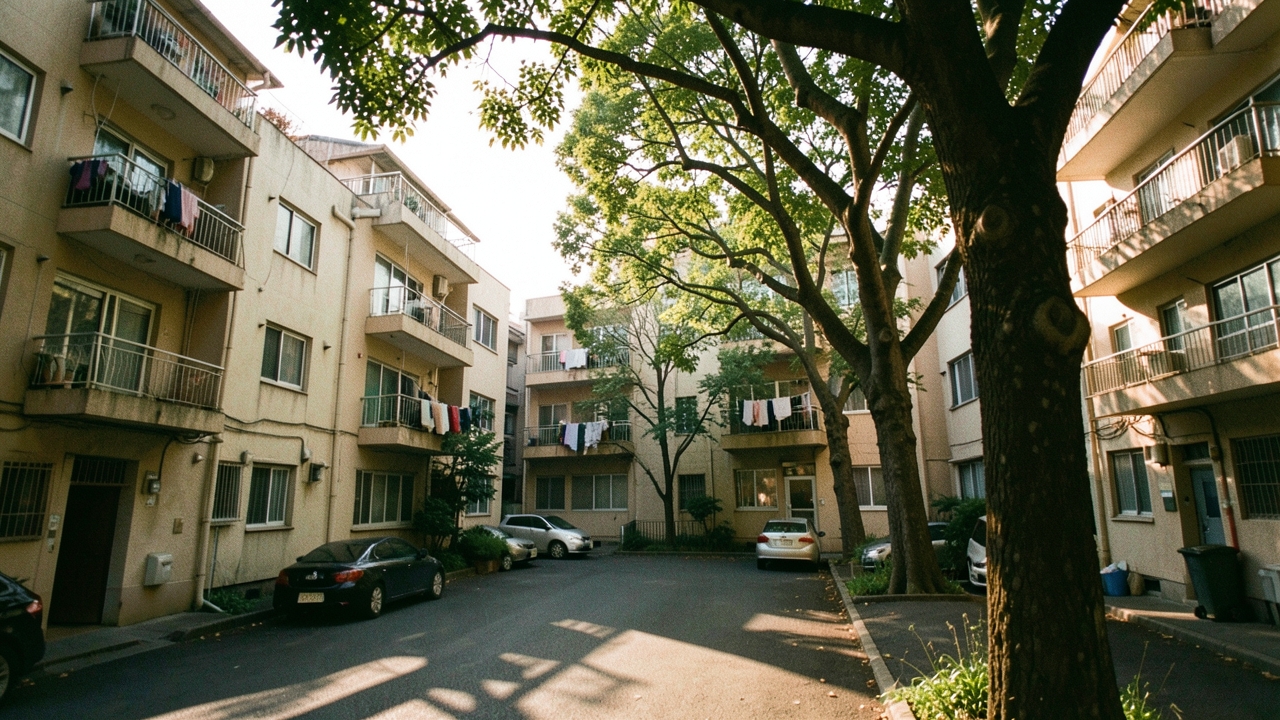
Does your home qualify? Property types and the 1.2 billion won line
Three categories are eligible: housing as defined by the Housing Act, registered senior welfare housing, and residential officetels — studio units that sit between apartment and office use. The inclusion of officetels is what people most often miss, though the unit must actually be used as a residence.
The value test uses combined assessed value of 1.2 billion won or less, not market price. Two consequences follow. First, assessed value typically runs below market, so a home worth more than 1.2 billion won on the open market can still qualify. Second, owning more than one property is not disqualifying: add up the assessed values of everything you hold, and if the total clears the line, you can apply. The 1.2 billion won figure matches the threshold in the piece on the single-home comprehensive real estate tax deduction, but one is a tax base and the other an eligibility gate, so they apply differently.
Residency is also required: the applicant or spouse must actually live in the home and hold resident registration there. That rule was relaxed in the 2026 revisions.
The real barrier to jutaek yeongeum is not age but assessed value. The age-55 test needs only one spouse to pass; the 1.2 billion won test sums every property you own.
How the monthly payout is set: reverse-engineering the rate from age 72
The agency's published benchmark is a 72-year-old with a 400 million won standard home on the lifetime fixed-payment plan, receiving 1,338,000 won a month. Divide payment by home value and the payout rate falls out.
- Rate as of March 2026 = 1,338,000 ÷ 400,000,000 = 0.3345% per month (4.014% annualized)
- Previous rate = 1,297,000 ÷ 400,000,000 = 0.32425% per month
- Increase = 1,338,000 ÷ 1,297,000 = +3.16%
The agency states an average increase of 3.13%. The small gap against the reverse-engineered 3.16% appears to come from the published figure being rounded down to the nearest thousand won. Because the payout is home value multiplied by an age-based rate, applying the age-72 rate of 0.3345% across home values gives a usable approximation:
| Home value (won) | Approx. monthly payout at 72 (won) | Annual total (won) |
|---|---|---|
| 300m | 1,003,500 | 12,042,000 |
| 400m (agency benchmark) | 1,338,000 | 16,056,000 |
| 600m | 2,007,000 | 24,084,000 |
| 900m | 3,010,500 | 36,126,000 |
| 1.2bn (valuation cap) | 4,014,000 | 48,168,000 |
The rate rises with age. Joining at 55 yields a far smaller monthly payment on the same home than joining at 72 — in exchange for a longer payment period. Which is better depends on how long you actually stay and on life expectancy, so there is no general answer. Exact figures come from the agency's payout estimator, which takes age and home value as inputs.

What 1 March 2026 changed: payouts and the guarantee fee
The revision moved on two fronts. Per the agency notice, the payout adjustment applies to applications received on or after 1 March 2026, while existing participants keep their original terms. At the same time the upfront guarantee fee fell from 1.5% of home value to 1.0%.
That fee is paid once, on the first payout date, so the change lands as a lump sum. Computing both rates across home values:
| Home value (won) | Old 1.5% (won) | New 1.0% (won) | Difference (won) |
|---|---|---|---|
| 300m | 4,500,000 | 3,000,000 | -1,500,000 |
| 400m | 6,000,000 | 4,000,000 | -2,000,000 |
| 600m | 9,000,000 | 6,000,000 | -3,000,000 |
| 900m | 13,500,000 | 9,000,000 | -4,500,000 |
| 1.2bn | 18,000,000 | 12,000,000 | -6,000,000 |
On a 400 million won home the fee drops from 6 million to 4 million won, as Bravo My Life reported. The same report put the cumulative value of the payout increase at roughly 8.49 million won over the life of the arrangement. For a 41,000 won monthly gap to reach 8.49 million, the calculation assumes 207 months — about 17 years and 3 months — of payments, taking a 72-year-old to age 89.
Combining both changes gives about 10.49 million won on a 400 million won home. Spreading the 2 million won fee saving across the same 207 months works out to 9,662 won a month, so the total improvement reads as roughly 50,662 won per month.
More is still pending. The expanded preferential-rate program applies to new participants from 1 June 2026, and a generation-linked version that passes payment rights to the next generation starts in June 2026. Which terms apply depends on when you file.

What happens if you move out: the residency rule and its exceptions
The old rule required actually living in the mortgaged home, which created problems for anyone entering a care facility or hospitalized long-term. The 2026 revision allows application with agency approval where illness treatment or admission to a care facility applies. Moving into a hospital or care facility after joining is handled through the same approval route.
Moving in with adult children for care is also recognized as an exception. None of these apply automatically, though — each requires notification and approval. Renting out the mortgaged home is a separate matter, so if anything threatens your resident registration status, checking with the agency first is the safer path.
What happens after death is worth computing in advance too. When both spouses have died, the home is sold and the proceeds settle the payments made, accrued interest and guarantee fees; anything left goes to the heirs. If the sale falls short, no additional claim is made against them. Since the home leaves the estate or shrinks within it, the arithmetic belongs alongside the piece on the 500 million won flat inheritance deduction versus itemized personal deductions.
What to check
- Combined assessed value — look up every property you own on the official assessed price portal and total them. If you sit near the 1.2 billion won line, the annual valuation release can flip your eligibility
- Property type — residential officetels qualify, business-use ones do not. Senior welfare housing counts only if registered
- Filing date — the payout revision and fee cut apply from 1 March 2026; the expanded preferential program from 1 June 2026
- Payment plan — beyond the lifetime fixed plan there are front-loaded and step-up options, each with a different rate. Compare them in the agency's estimator
- Resident registration — both actual residence and registration are required. If a care or treatment exception applies, confirm the approval process first
- Existing mortgage — if the home carries a lien, work out how to clear it and whether the lump-sum withdrawal limit can be used for that
Sources
- What is jutaek yeongeum — eligibility and qualifying homes, Korea Housing Finance Corporation
- Notice on monthly payout adjustment — Korea Housing Finance Corporation
- Reverse mortgage payouts rise in 2026 — Bravo My Life