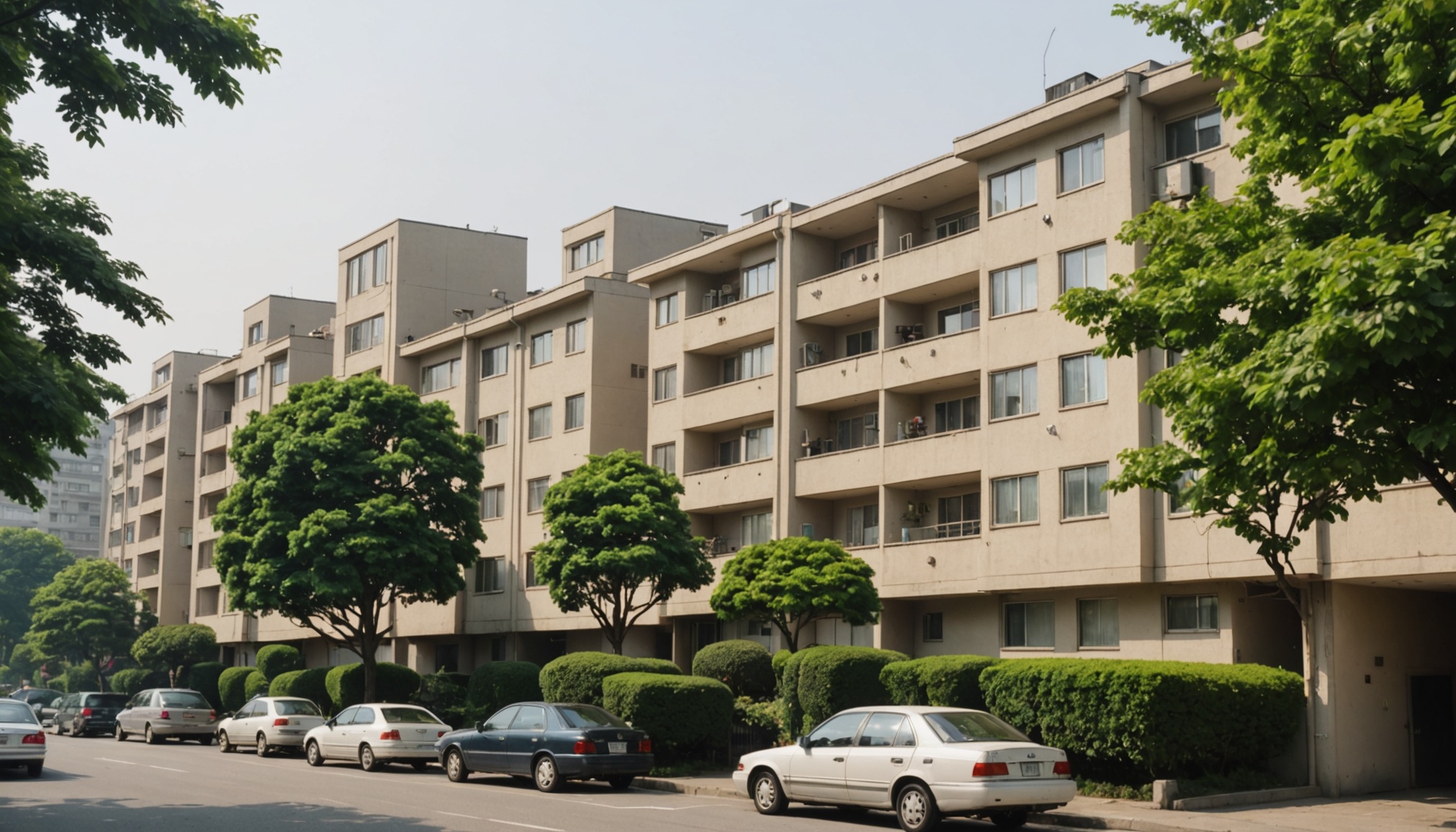
The long-term repair reserve — jangi suseon chungdanggeum — that a tenant pays each month inside an apartment maintenance bill is money the owner must return at move-out. The law assigns the burden to the owner, not the occupant. For a unit of 112㎡ supply area (84㎡ exclusive area, what Koreans call a 34-pyeong flat), two years of residence puts somewhere between 546,000 and 1.69 million won on the settlement table, depending on the complex's accrual rate. The money does not arrive automatically; it has to be claimed.
The law puts the burden on the owner
The reserve funds future replacement and repair of long-lived shared facilities: elevators, exterior walls, plumbing. According to Korea's Easy Law information service, the accrual obligation applies to apartment complexes of 300 units or more, complexes with elevators, and those with central heating, among others. The party responsible is the owner of the unit.
On the actual bill, though, the item rides along inside the maintenance charge. The management body levies it monthly per household, and whoever receives that bill is usually the tenant in residence. That mismatch between legal burden and actual payer is what Article 31(8) of the Enforcement Decree of the Multi-Family Housing Management Act resolves: an owner must reimburse a reserve paid on their behalf by an occupant.
The monthly charge follows a set formula. Total planned repair costs over the long-term repair plan period are divided by total supply area, twelve months and the plan period in years, then multiplied by the household's supply area. In practice the amount reduces to a per-square-meter rate times the unit's supply area. The base is supply area, not exclusive area — a distinction that trips up many calculations. Understanding why an 84㎡ exclusive-area unit is called 34 pyeong keeps the assessed area straight.
How much accumulates over two years in a 34-pyeong unit
Rates vary by complex. A practitioner's column in Korea Apartment News reports a national average accrual rate of 203 won/㎡ as of June 2021, against 628.8 won/㎡ calculated as adequate in a February 2017 Ministry of Land, Infrastructure and Transport study. The writer proposes a working baseline of 400 won/㎡ or more for complexes within five years of occupancy approval, and around 250 won/㎡ for those past thirty years.
Applying those three rates to supply area produces the settlement figures below, calculated directly as rate × supply area × months.
| Accrual rate (won/㎡ per month) | Monthly charge — 79㎡ (won) | 2-year settlement — 79㎡ (won) | Monthly charge — 112㎡ (won) | 2-year settlement — 112㎡ (won) | 4-year settlement — 112㎡ (won) |
|---|---|---|---|---|---|
| 203 (2021 national average) | 16,037 | 384,888 | 22,736 | 545,664 | 1,091,328 |
| 400 (proposed baseline, newer complexes) | 31,600 | 758,400 | 44,800 | 1,075,200 | 2,150,400 |
| 628.8 (2017 ministry study) | 49,675 | 1,192,205 | 70,426 | 1,690,214 | 3,380,429 |
A 79㎡ supply area corresponds to 59㎡ exclusive, and 112㎡ to 84㎡ exclusive — the two most common Korean floor plans. Two identical 34-pyeong units can differ more than threefold in two-year settlement depending on whether the complex charges 203 or 628.8 won per square meter. That the national average sits at roughly a third of the rate deemed adequate also means many complexes are underfunded against the day facilities actually need replacing. The applicable rate appears on the maintenance bill line item or can be obtained from the management office; multiplying it by assessed area is a quick check against the billed figure.
What determines the refund is not how long you lived there, but the complex's per-square-meter rate multiplied by your unit's supply area.
One line in the special terms can block the claim
The decree establishes the reimbursement duty, but it is not treated as a mandatory rule that overrides party agreement. A property law commentary in Economist Korea holds that where a lease includes a special term stating the tenant bears the long-term repair reserve, that agreement is valid and the tenant cannot demand reimbursement. A single line in the special terms box governs several hundred thousand won over two years.
Two things to check at signing. First, whether the special terms shift the reserve onto the tenant. Second, if they do not, whether a clause can be added stating that the landlord settles the reserve at lease termination. Most disputes arise not from interpreting the statute but from a contract that says nothing at all.
When the owner has changed, or refuses to pay
Sometimes the unit is sold mid-tenancy. According to the same commentary, a change of ownership does not break the claim: the tenant may demand reimbursement from the new owner for the entire period of residence. There is no need to track down the previous owner. The claim window runs ten years from the end of the lease, so discovering the entitlement long after moving out is not fatal.
The procedure starts with paperwork. The practical sequence set out by Lawtalk begins with obtaining a payment certificate from the management office, stating the total reserve paid during the residence period; that document is the basis of the claim. In practice the amount is often settled alongside the deposit through the real estate agency on the day of final settlement. Several items land on the same day, so tabulating them in advance — as with brokerage fee bracket calculations — keeps anything from being missed.
If the landlord refuses without cause, the next step is a certified content-proof letter, and failing that, an application to the court for a payment order. If the other side files an objection, the matter moves to a formal hearing, usually handled as a small claim given the sums involved. A payment order proceeds on documents alone, so a payment certificate and the lease contract are generally enough.
Where settlements usually go wrong
The long-term repair reserve and the general maintenance charge (suseon yujibi, repair and upkeep cost) are separate line items. Upkeep cost is a consumable shared expense borne by the occupant as a matter of principle, and it is not refundable. Claiming both together gives the landlord grounds to reject the whole request.
Some complexes adjust the rate mid-tenancy. Long-term repair plans are reviewed and revised every three years, and a rate change moves the monthly charge with it. Because the payment certificate records amounts actually levied and paid, a mid-term rate change can put it at odds with a hand calculation. In that case the certificate governs.
Monthly-rent tenants should also check whether the reserve is bundled into a flat maintenance fee. Where fees are charged as a lump sum, the item has to be itemized separately for a claim to have a basis.
What to check
- Whether the lease's special terms assign the long-term repair reserve to the tenant
- Whether the maintenance bill separates the repair reserve from general upkeep cost
- The complex's per-square-meter accrual rate, from the management office or the bill's detail page
- Whether the assessment base is supply area rather than exclusive area
- Requesting the payment certificate from the management office once the move-out date is fixed
- Whether the reserve appears on the settlement list for the deposit-return date
- If already moved out, whether ten years have passed since the lease ended
- The escalation path if refused — content-proof letter, then payment order, with the payment certificate and lease in hand
Sources
- Residential leases — claiming reimbursement of the long-term repair reserve (Easy Law)
- Can the long-term repair reserve be claimed from a new owner? — Economist Korea
- Accrual rates for the repair reserve need proper calculation — Korea Apartment News
- Understanding the long-term repair reserve and how to reclaim it — Lawtalk