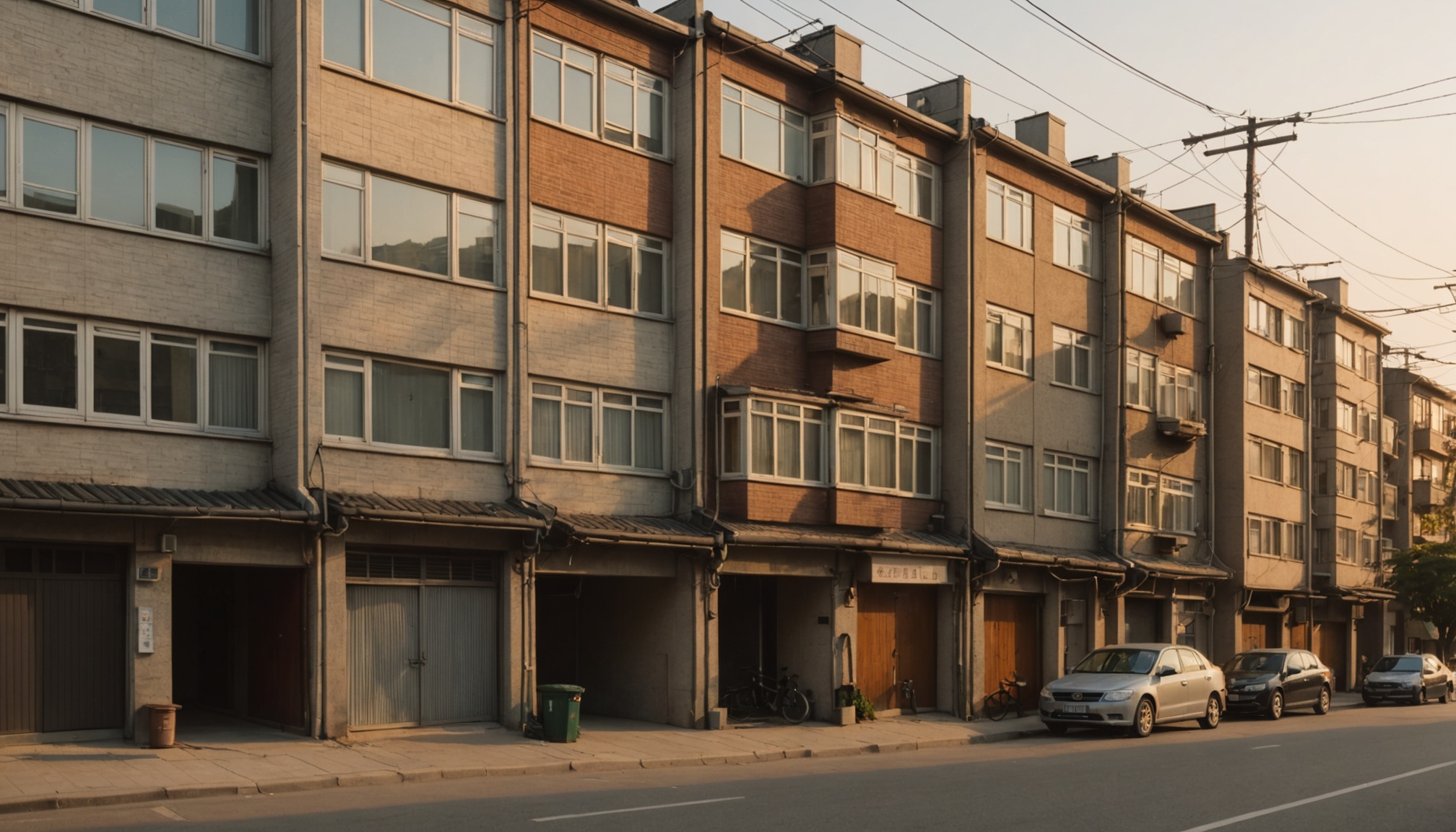
A dagagu (multi-household) house is a single registered title with a single owner. So if it goes to auction, the deposits of every tenant in the building compete for priority against one collateral. A dasedae (multi-unit) house, by contrast, has a separate title and owner for each unit, such as 101 and 102, so you only need to check the rights on your own unit. The names sound alike, but the difficulty of vetting jeonse (lump-sum deposit lease) risk is fundamentally different.
Safehomes locates the core of this difference in the property register: a dagagu has one register for the whole building, while a dasedae has a separate register per unit. The fact that the title is bundled into one explains every risk of a dagagu jeonse.
They differ from the register up
Under building law a dagagu is classified as a detached house, and a dasedae as a communal house. That classification flows into ownership, registration, and how the property is sold.
| Item | Dagagu (multi-household) | Dasedae (multi-unit) |
|---|---|---|
| Housing type | Detached house | Communal house |
| Ownership | Whole building, one owner | Separate owner per unit |
| Property register | One register for the building | One register per unit |
| Selling a single unit | Not possible (sold whole) | Possible |
| Deposits at auction | All tenants compete on one collateral | Only that unit's rights apply |
With a dasedae you only need to read the liens and senior claims on the register of the unit you lease. With a dagagu the whole building is one block, so even if your unit looks clean, other tenants' deposits ranking ahead of yours raise your risk. That is exactly where Lawtalk warns to be especially careful with dagagu jeonse.
The risk of a dagagu jeonse hides not in your contract but in the neighbor's contract in the same building. No matter how well you secure a confirmed date, if you do not know the total deposits ranking ahead of you, you cannot know your place on the priority list.
Why a confirmed date is not enough
The priority right you gain from a confirmed date (hwakjeong-ilja) and move-in report is a rank, not a guaranteed amount. At auction the sale proceeds go in order to liens and senior tenants, and if nothing is left, junior claimants lose their deposit. A dagagu may have many tenants ahead of you, so without knowing the total deposits stacked before you, a confirmed date alone cannot tell you your real protection. Sorting out how the confirmed date and move-in report create priority first makes this calculation easier.

So before a dagagu contract you should, with the landlord's consent, obtain the confirmed-date status record at the community office to check the total deposits of tenants ahead of you, then add the maximum-claim amount of liens on the register and compare it to the building's market value. Law firm Ehyun also lists confirming the senior deposit total as the first step to dagagu jeonse safety.
Calculating whether your deposit is safe
Suppose you enter a dagagu building worth 1 billion won. The register shows a maximum lien claim of 300 million won, the confirmed-date record shows senior tenant deposits totaling 400 million won, and your deposit is 200 million won. The priority list stacks up like this.
| Item | Amount | Rank vs my deposit |
|---|---|---|
| Building value (appraisal basis) | 1,000M won | Reference |
| Maximum lien claim | 300M won | Senior |
| Senior tenant deposits | 400M won | Senior |
| Total ranking ahead of me | 700M won | — |
| My deposit | 200M won | — |
| Senior + my deposit | 900M won (90% of value) | Over the safe line |
Since 700 million already ranks ahead of you, if the auction closes at 700 million, or 70% of value, that money goes first to the lien and senior tenants, and your 200 million may not return at all. The usual safe line, that senior claims plus your deposit stay within 70 to 80% of value, is far exceeded here at 90%, so this is a danger zone. Under the same terms, if senior tenant deposits were only 100 million, claims ahead would be 400 million and the total with your deposit 600 million, or 60% of value, and the judgment changes. Before you plug in the numbers, a phrase like clean register cannot by itself settle safety.
What to check
When the dagagu and dasedae distinction is unclear and before signing a jeonse, these items can be verified with data.
- Confirm the housing type first — check the building ledger for whether it is dagagu (detached) or dasedae (communal). Even a name ending in villa may be a dagagu on the ledger.
- Obtain the confirmed-date status record — for a dagagu, with landlord consent, always confirm the total deposits of tenants ahead of you.
- Add up maximum lien claims — check the liens on the register and compare the sum with senior deposits against value.
- Compute the safe line — if senior claims plus your deposit exceed 70 to 80% of value, treat it as a warning sign.
- Whether deposit insurance is available — check jeonse deposit insurance conditions in advance, and keep the lease-registration order process in mind if trouble arises.