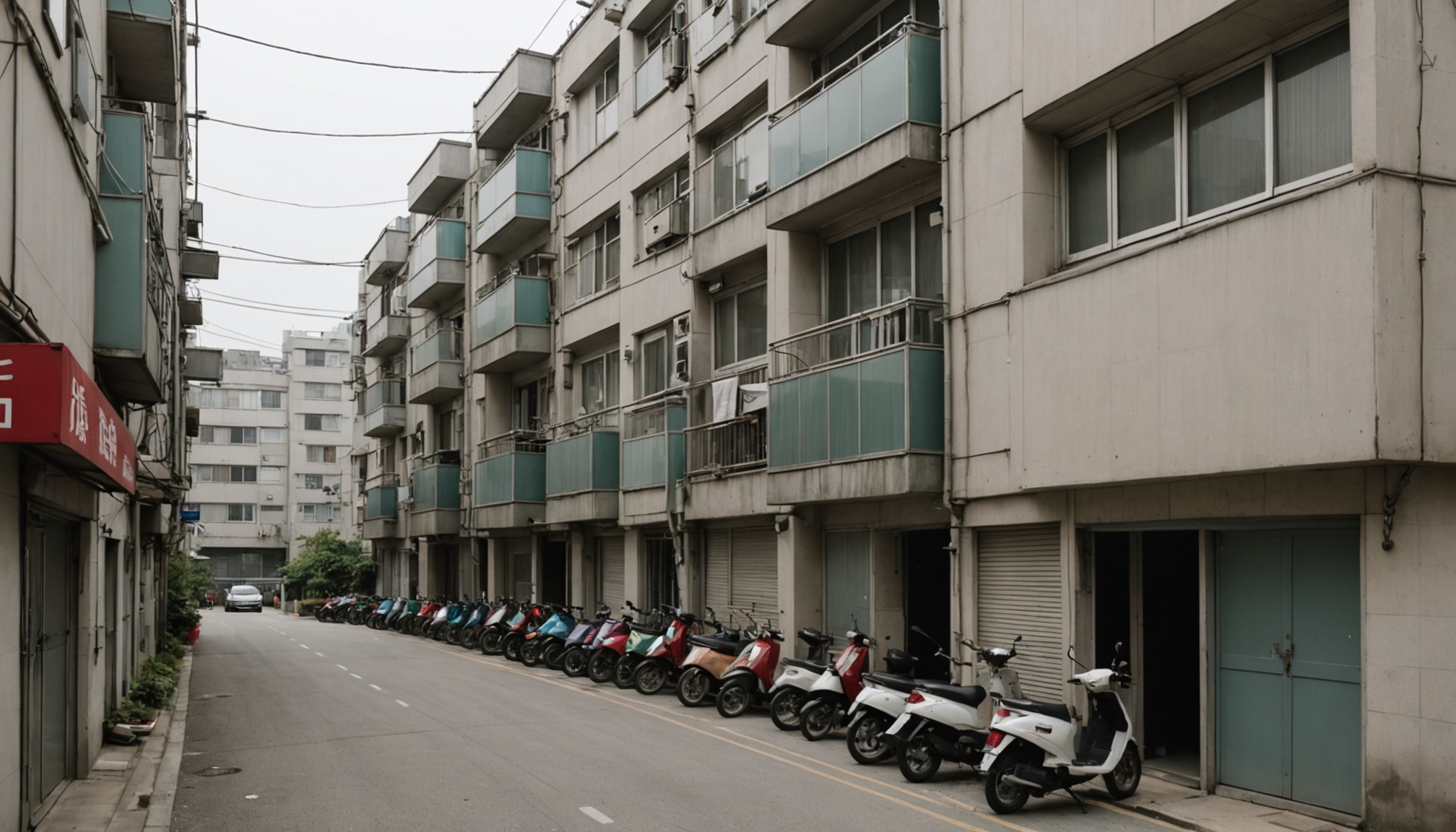
What decides whether a jeonse (lump-sum deposit lease) qualifies for a deposit-return guarantee is not the market rent level but the government's official published price for the property. The guarantee limit is house value multiplied by a 90% collateral recognition ratio, minus senior claims — and house value is taken as 140% of the official price. Multiply 140% by 90% and you get 126%, the ceiling that deposit and senior debt together cannot cross.
For a villa with an official price of 300 million won, that ceiling is 378 million. If the register shows a senior mortgage of 50 million, the deposit can only run to 328 million. Whether the market price is 400 or 450 million never enters the calculation.

90% and 140% build the limit
The Seoul Housing Portal states the guarantee limit as house value times a 90% collateral recognition ratio, less senior claims. Its worked example: a house valued at 100 million won gives a limit of 90 million.
The real gate is what counts as house value. KB Real Estate's 2026 comparison notes that HUG, HF and SGI all combine the 90% ratio with an official price taken at 140%, capping the total at 126% of the published price. That recognition band used to sit nearer 150%, and tightening it concentrated rejections in newly built villas and multiplex units where market price and official price diverge most.
The limit is set by the official published price, not by the market.
Senior claims mean mortgages registered in section eul of the property register. Where the maximum claim amount is registered well above the actual loan balance, that larger figure is often what gets subtracted — and once the lease is signed there is no way back. What to read on the register is covered in calculating a safe deposit line from the maximum claim amount.
With an official price of 300 million, how large a deposit qualifies?

Multiplying the official price by 1.26 gives the combined ceiling for deposit plus senior debt; any senior claim eats directly into deposit headroom. The table below converts that across price bands.
| Official price (KRW) | 126% ceiling (KRW) | Max deposit, no senior debt (KRW) | With 50m senior debt (KRW) |
|---|---|---|---|
| 150m | 189m | 189m | 139m |
| 200m | 252m | 252m | 202m |
| 300m | 378m | 378m | 328m |
| 400m | 504m | 504m | 454m |
| 500m | 630m | 630m | 580m |
| 600m | 756m | 700m (cap applies) | 700m (cap applies) |
The last row bends because HUG and HF cap deposits at 700 million won in the capital region and 500 million elsewhere. Divide 700 million by 1.26 and you get 555.6 million: above that official price, the binding constraint stops being the 126% rule and becomes the absolute cap. Outside the capital region, 500 million divided by 1.26 gives 396.8 million as the same pivot.
SGI Seoul Guarantee sets no deposit cap for apartments and goes to 1 billion won for other housing types. The 126% test, however, is common to all three insurers, so it is not something switching provider gets around.
The enrolment deadline
Missing the window causes as many rejections as failing the ratio. For a new lease, enrolment must happen before half the lease term has passed, counted from the later of the balance payment date and the move-in registration date. On a two-year lease that is twelve months from whichever date falls later.
Four baseline conditions apply alongside it.
- Move-in registration and a fixed date stamp, with the tenant actually living there
- A lease term of at least one year
- A contract concluded and sealed through a licensed broker
- No auction filings, seizures or other encumbrances on the register
Eligible properties include detached, multi-household, multi-user, row and multiplex housing, senior welfare housing, residential officetels and apartments. An officetel must be stated as residential in the contract. What move-in registration and the fixed date stamp each protect is covered in why opposing power starts at midnight the following day, and the fallback when a property goes to auction without a guarantee in place is the 55 million won priority repayment line.

What it costs over two years
The premium rate runs from 0.097% to 0.211% a year depending on deposit size, housing type and debt ratio. An apartment at 100 million won or less with a debt ratio at or below 70% pays 0.097%; other housing above 500 million with a debt ratio over 80% pays 0.211%. Applying both ends across deposit sizes shows how wide the band is.
| Deposit (KRW) | Annual at 0.097% (KRW) | Annual at 0.211% (KRW) | Two-year range (KRW) |
|---|---|---|---|
| 200m | 194,000 | 422,000 | 388,000 – 844,000 |
| 300m | 291,000 | 633,000 | 582,000 – 1,266,000 |
| 500m | 485,000 | 1,055,000 | 970,000 – 2,110,000 |
| 700m | 679,000 | 1,477,000 | 1,358,000 – 2,954,000 |
The same deposit can cost more than twice as much over two years depending on debt ratio and housing type. HUG discounts sit on top: 60% for low-income and single-parent households, 40% for multi-child, disabled and elderly households and for newlyweds. A 300 million won deposit charged at 0.115% comes to 345,000 won a year, and a 40% newlywed discount brings that to 207,000.
Premiums can also be reimbursed. Under Seoul's published scheme, young tenants aged 19 to 39 earning up to 50 million won a year and newlyweds within seven years of marriage earning up to 75 million won jointly recover the full premium up to 400,000 won, while other households earning up to 60 million recover 90% to the same cap. Applications go through Gov24, the Ansim Jeonse portal or the district office, and all three insurers qualify. For the 300 million won row above, that reimbursement covers a large share of the two-year cost.
What to check
- Before signing, look up the property's official published price and multiply by 1.26 — after the contract there is nothing to adjust
- Subtract the maximum claim amount in section eul of the register from that ceiling first, since the registered maximum rather than the loan balance is usually what counts
- Official price of 555.6 million in the capital region, 396.8 million elsewhere — above those points the deposit cap of 700 or 500 million binds first
- Mark the halfway point of the lease term on a calendar, counted from the later of balance payment and move-in registration
- Confirm the broker's seal on the contract, and for an officetel that residential use is stated
- After paying the premium, check eligibility for premium reimbursement on Gov24 or the Ansim Jeonse portal — up to 400,000 won for young tenants and newlyweds