
Reconstruction investment is often called "a waiting game." More precisely, it is a game of passing through risks of a different character at every stage in sequence. Depending on which stage you enter, the expected return, the time you must commit, and what you stand to lose all differ. Now that the Seoul Metropolitan Government has declared a 310,000-unit supply target by 2031 and is accelerating redevelopment along the Yongsan Station Han River riverfront, the ability to read the risk structure of each stage is more necessary than ever.
Why Re-examine Stage Risks Right Now?
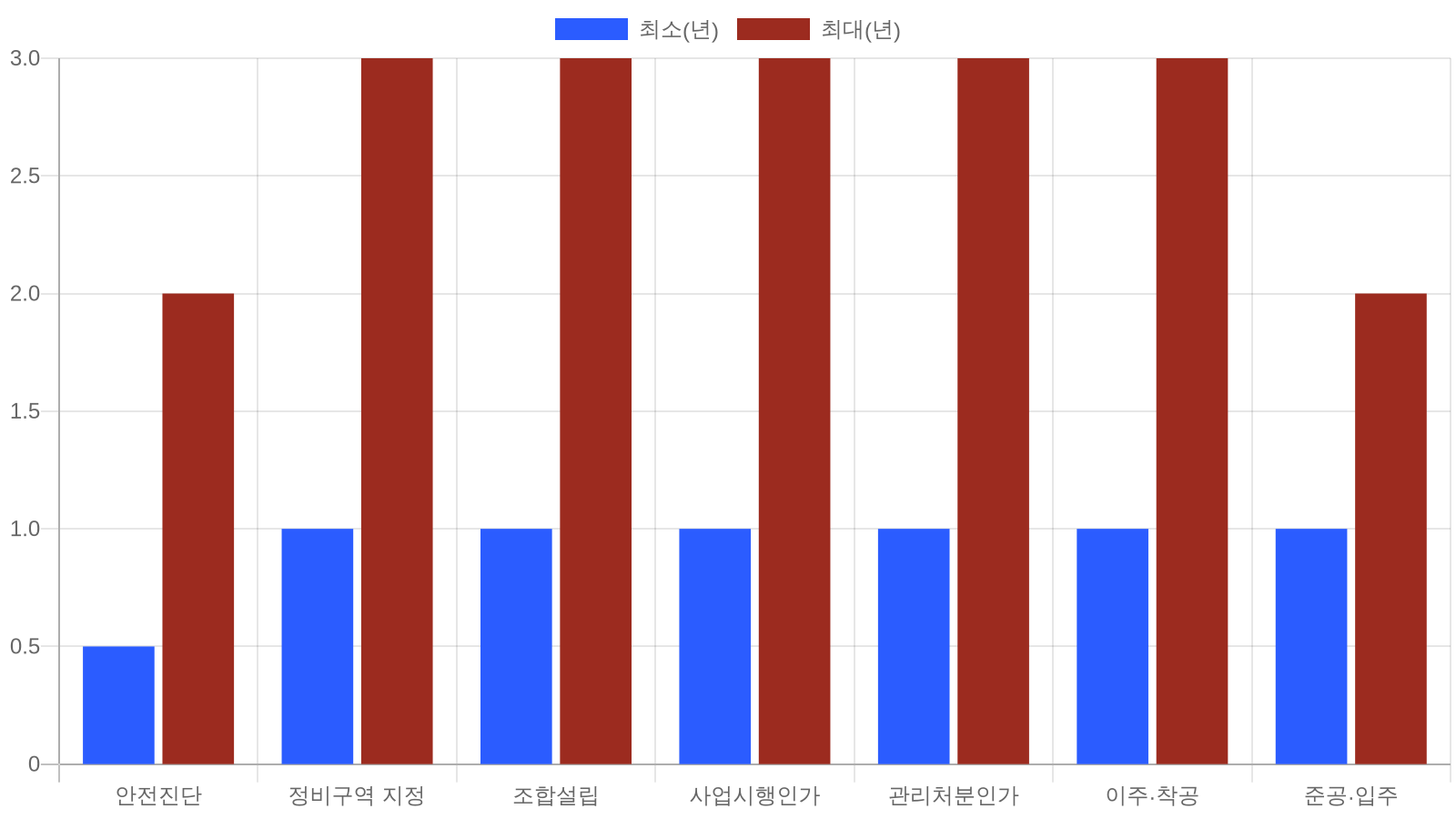
According to the Korea Economic Daily, the Seoul Metropolitan Government announced it will "supply 310,000 housing units by 2031" and deliver results citizens can feel. This figure is a declaration, but whether active project sites can actually fill that number depends on how fast the projects currently underway in each stage gain momentum. Between declaration and completion, there are at least seven official stages from safety inspection to move-in, and administrative, legal, and financial risks intersect at each stage.
In the same context, the Korea Economic Daily reported that redevelopment and reconstruction around Yongsan Station and the Han River are accelerating. Yongsan is a representative high-regulation, high-expectation zone. A signal that project pace is quickening also means that end-buyers and investors weighing the timing of entry at each stage are multiplying. For that scale to function correctly, one must know the substance of the stage-by-stage risks.
Additionally, Yonhap News reported that prosecutors have launched a crackdown on real estate speculation and price manipulation. The stronger the government's anti-speculation enforcement stance, the higher the legal risk in early-stage reconstruction — particularly in share (jibun) trades before and after association establishment. Reading stage-by-stage risk is not only a profit calculation but also a legal safety check.
The Structure of Stage-by-Stage Risk: What Blows Up Where
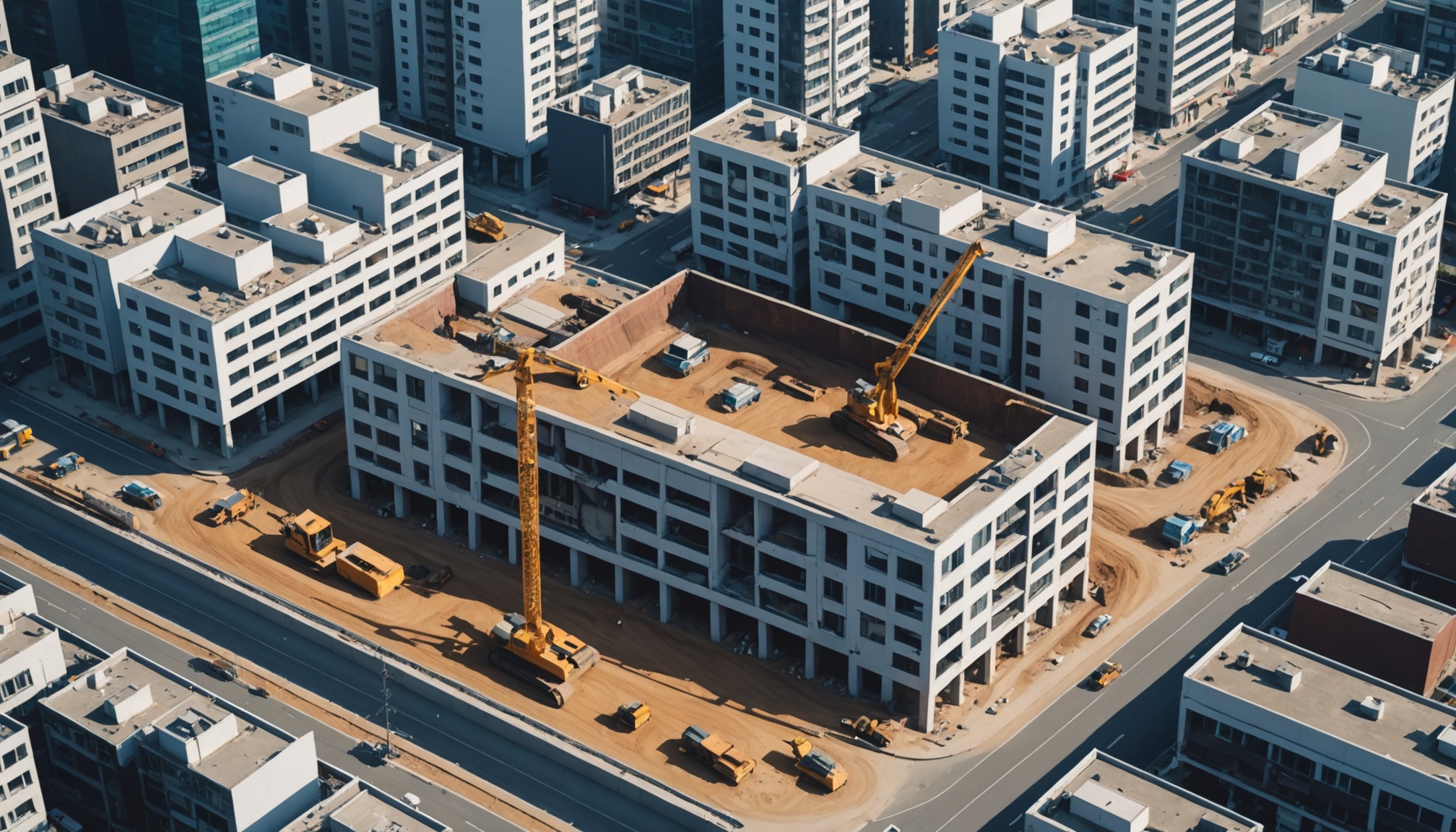
Reconstruction procedures can be broadly divided into "project preparation → association formation → approval stages → execution stages." The character of the risks end-buyers encounter at each phase is entirely different.
| Stage | Key Event | Primary Risk Type | Risk Intensity |
|---|---|---|---|
| Before/after safety inspection | Whether precision safety inspection is passed | Possibility of the project being scrapped entirely | Very high |
| Redevelopment zone designation | Zone boundaries and land use confirmed | Regulation changes, zone reduction | High |
| Association establishment approval | Consent rate satisfied (75% or more) | Internal association disputes, lawsuits | High |
| Project implementation approval | Construction plan finalized | Design changes, administrative delays | Medium |
| Management and disposition plan approval | Additional assessments and allocation confirmed | Surge in additional contributions | High |
| Relocation / groundbreaking | Demolition and construction begin | Construction cost increases, contractor risk | Medium–high |
| Completion / move-in | Title transfer | Defects, delayed association dissolution | Low–medium |
The safety inspection stage is the gate that determines whether the project can even begin. If the project fails here, capital invested in purchasing shares is locked up for an extended period. After zone designation, the association establishment stage requires consent from at least three-quarters of landowners and rightful owners under the Act on Urban and Residential Environment Improvement (dosijeongbibeop). If this is not met, approval is impossible. Even after association establishment, lawsuits contesting the validity of the approval by dissenting members are frequent. Buyers entering at this stage may effectively be purchasing shares in an association under active legal dispute.
Reconstruction risk does not come all at once — it repeats under different names, at different intensities, at each stage.
The management and disposition plan approval stage is the true benchmark for profitability judgment. This is where the "additional contribution" is confirmed. Someone who purchased before project implementation approval cannot know the exact size of the contribution in advance. When construction cost increases, reduced general-sale unit volume, and design changes pile up, there can be a large divergence between initial expectations and actual contributions. After management and disposition approval, in the relocation and groundbreaking stage, a contractor's demand for construction cost increases or financial risk becomes a variable. This stage is physically the most visible, but is "locked risk" in the sense that buyers who have already entered find it difficult to exit.
How Seoul's Supply Plan and Yongsan Affect Stage Risk
Seoul's 310,000-unit supply target and the acceleration of the Yongsan Station Han River project send two contradictory signals simultaneously to the reconstruction stage-risk landscape. One is "enhanced administrative support." For Seoul to meet its supply target, it must accelerate the processing speed of zone designations and approvals. This suggests that early-stage administrative delay risk may be lower than in the past. The Seoul announcement emphasized "results citizens will feel" — which ultimately means visible outputs measured in groundbreakings and move-ins.
The other is "presale risk from supply expansion." If 310,000 units actually come to market, the competitive landscape of the general-sale market changes. The profitability of reconstruction projects depends heavily on general-sale (ilban bunyang) prices and volume. Greater supply can lower general-sale competition rates, which affects the calculation of members' contribution assessments. For buyers of project sites at a stage prior to management and disposition plan approval, the total supply volume coming to market through 2031 must be incorporated into their contribution simulations.
Also, as Yonhap News reported, following the capital gains surcharge on May 10, Seoul apartment transactions in June fell sharply from the previous month and wait-and-see sentiment is deepening. Reconstruction share trades are not immune to this atmosphere. Even if you want to buy shares in a specific-stage project during a wait-and-see market, sellers are also watching the market and tend to hold asking prices or pull listings. No matter how well you read the stage risks, you must be aware that you are in a market phase with liquidity risk attached.
Things to Verify
- Have you directly looked up on Seoul's Jeongbi Mongttang (cleanup system) or the district government website which stage the project site of interest is currently at (safety inspection / zone designation / association establishment / project implementation / management-disposition / relocation-groundbreaking)?
- If it is pre-association establishment, have you confirmed the safety inspection grade and whether a re-examination has been requested?
- If it is post-management-and-disposition approval, have you checked the most recent general meeting materials for any history of changes in additional contribution amounts?
- Have you confirmed whether a contractor has been selected and checked the selected contractor's recent financial and credit status from public disclosure materials?
- Have you separately consulted a tax accountant on capital gains surcharge applicability (acquisition date, holding period, conditions for inheriting member status)?
- Have you identified how many project sites in the same zone (especially Yongsan / Han River area) as the site of interest are included in Seoul's 310,000-unit supply schedule — this affects the future general-sale competitive environment.
- Under the intensified prosecutorial anti-speculation stance, have you had legal review confirming that the contract for transferring/acquiring member status meets the relevant statutory requirements?
References
- Yongsan Station + Han River: redevelopment and reconstruction accelerating — Korea Economic Daily
- "310,000 units by 2031 — results citizens will feel" — Korea Economic Daily
- Seoul apartment market ahead of tax reform: "wait-and-see spreads, transactions fall sharply" — Yonhap News
- Prosecutors join war on real estate speculation — dedicated prosecutors nationwide — Yonhap News