
A salaried worker in Korea with gross annual pay of ₩55 million or less gets 17% of the rent they paid subtracted straight from their tax bill; between ₩55 million and ₩80 million, the rate is 15%. Live a year in a place renting for ₩600,000 a month and that is 17% of ₩7.2 million — ₩1,224,000 — or 15%, ₩1,080,000. One won of salary decides a ₩144,000 gap.
Because this is a tax credit rather than an income deduction, the arithmetic is simple. It does not shrink your taxable base and return only your marginal rate; it comes off the calculated tax in full. The eligibility conditions, though, are tight — whether your household owns no home, the size or assessed value of the property, and whether your lease address matches your resident registration. Miss any one and the figure is zero.

What your rent actually returns
The National Tax Service's guidance on the monthly rent tax credit turns on two axes. The credit rate is 17% for gross pay of ₩55 million or under and 15% from ₩55 million up to ₩80 million. Eligible rent is capped at ₩10 million a year.
Multiply eligible rent by the rate and you are done. The table below works out, by monthly rent band, the annual rent paid, the eligible amount after the cap, and the tax actually removed at each of the two rates.
| Monthly rent (₩10k) | Annual rent (₩10k) | Eligible after ₩10m cap (₩10k) | Credit at 17% (₩10k) | Credit at 15% (₩10k) | Gap (₩10k) |
|---|---|---|---|---|---|
| 40 | 480 | 480 | 81.6 | 72.0 | 9.6 |
| 50 | 600 | 600 | 102.0 | 90.0 | 12.0 |
| 60 | 720 | 720 | 122.4 | 108.0 | 14.4 |
| 70 | 840 | 840 | 142.8 | 126.0 | 16.8 |
| 83.3 | 1,000 | 1,000 | 170.0 | 150.0 | 20.0 |
| 100 | 1,200 | 1,000 | 170.0 | 150.0 | 20.0 |
Two things fall out of the table. First, the ₩10 million cap binds at ₩833,000 of monthly rent. Pay more and the credit stops at ₩1.7 million on the 17% rate and ₩1.5 million on the 15% rate — someone paying ₩1 million a month gets back exactly what someone paying ₩833,000 does. Second, the gap between the two rates widens as rent rises, then locks at ₩200,000 once the cap binds.
One more thing belongs in the calculation: if the credit exceeds your calculated tax, the excess is lost. A tax credit only offsets tax you actually owe, so anyone whose final tax has already been pushed near zero by other deductions will not receive the full figure shown above.

At ₩55 million, one won decides it
The rate is a step, not a graduated scale. Gross pay of exactly ₩55 million gets 17%; ₩55,000,001 gets 15% applied to the entire amount. On ₩7.2 million of rent that is ₩1,224,000 versus ₩1,080,000, a ₩144,000 difference. A one-won raise can cut after-tax income by more than ₩140,000.
Gross pay here is not your contracted salary but that figure net of non-taxable income. Meal allowances, private-vehicle allowances, and childbirth or childcare allowances all come out, so a contract above ₩55 million can still leave gross pay below the line. The number that decides it is the single "gross pay" line on your withholding receipt.
If you paid rent but fail the conditions, one route remains. You can request a cash receipt for housing rent on the payments and claim them under the credit-card-and-cash-spending income deduction instead. That is a deduction, though, so it only returns your marginal rate. On the same ₩7.2 million the tax credit generally returns more, and you cannot claim both.
Which homes qualify
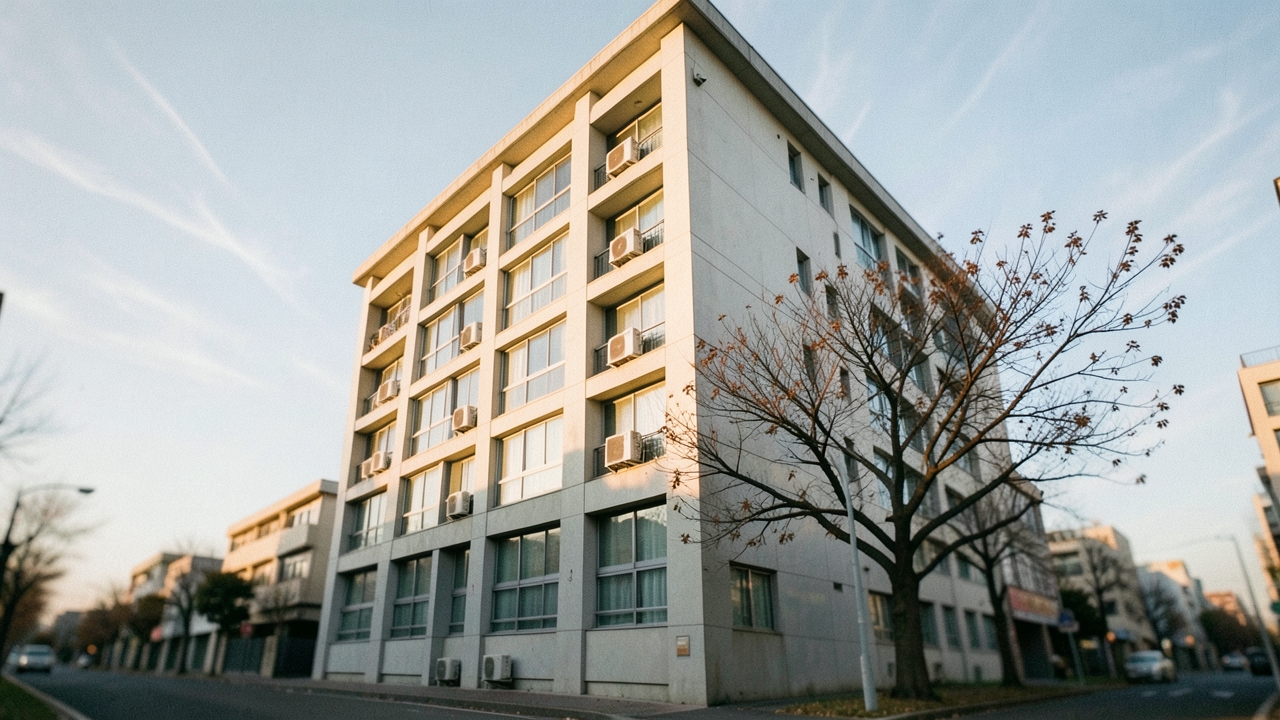
Per the NTS, an eligible property is either within the national housing size standard (85㎡ of exclusive floor area) or has an assessed value of ₩400 million or less. Meeting one is enough. A place over 85㎡ still qualifies if its assessed value is at or under ₩400 million, and a place assessed above ₩400 million still qualifies if it is 85㎡ or smaller. Residential officetels and gosiwon (small single-room lodgings) are included.
The conditions on the person are three. As of the end of the tax year, be the head of a household that owns no home (a household member also qualifies if the head has claimed no housing-related deduction); have gross pay of ₩80 million or less, or comprehensive income of ₩70 million or less; and have the address on the lease agreement match the address on your resident registration extract.
The third is what trips people up most often. Register your move-in late and the rent paid before that date drops out. Move in during March and register in June, and three months vanish from the calculation — at ₩600,000 a month, ₩1.8 million leaves the eligible base and ₩306,000 of credit disappears at the 17% rate. The lease and the registration must match down to the building and unit number. This is a separate procedure from the mandatory lease reporting that applies above a ₩60 million deposit or ₩300,000 monthly rent; filing that report does not substitute for move-in registration.
Documentation is the resident registration extract, a copy of the lease agreement, and proof of payment such as bank transfer receipts or deposit slips. Neither the landlord's consent nor a confirmed date stamp is required.

From 2027: a ₩12 million cap, and 17% for young renters regardless of income
The 2026 tax reform bill changes two things. As Money Today reports, the eligible rent cap rises from ₩10 million to ₩12 million a year, and young renters get the 17% rate applied uniformly regardless of income. The youth provision runs for three years, from 2027 through 2029.
At a ₩12 million cap, monthly rent up to ₩1 million falls entirely within the eligible base. At 17% that is ₩2.04 million, ₩340,000 above the current ceiling of ₩1.7 million. On the 15% rate it is ₩1.8 million, up ₩300,000. But anyone paying under ₩833,000 a month sees no change at all from the cap increase — and since far more renters sit below the cap than above it, the practical reach is limited.
The weight of the youth provision lies elsewhere. Today the rate drops to 15% the moment gross pay clears ₩55 million; under the bill, young renters keep 17% across the ₩55–80 million band. On ₩12 million of rent that is ₩1.8 million versus ₩2.04 million, a ₩240,000 difference. For them, the one-won cliff described above simply disappears.
The monthly rent credit is decided by eligibility, not by amount — a single day's delay in registering your move-in erases months of rent from the calculation.
What to check
- Whether the "gross pay" figure on your withholding receipt sits above or below ₩55 million — the number net of non-taxable income is what counts.
- Whether the lease address and the resident registration address match down to building and unit number.
- If move-in registration came after you actually moved in, the eligible base falls by months delayed × monthly rent.
- If the exclusive floor area exceeds 85㎡, whether the assessed value is ₩400 million or less.
- Whether the entire household owned no home as of the end of the tax year — property held by other household members counts.
- Whether rent transfers to the landlord's account are on record. Cash payments are hard to substantiate.
- If you fail the conditions, whether the cash-receipt route for housing rent is still open as an income deduction.
- If your final tax is near zero, you will not use the full credit — review it alongside your other deductions and their order.