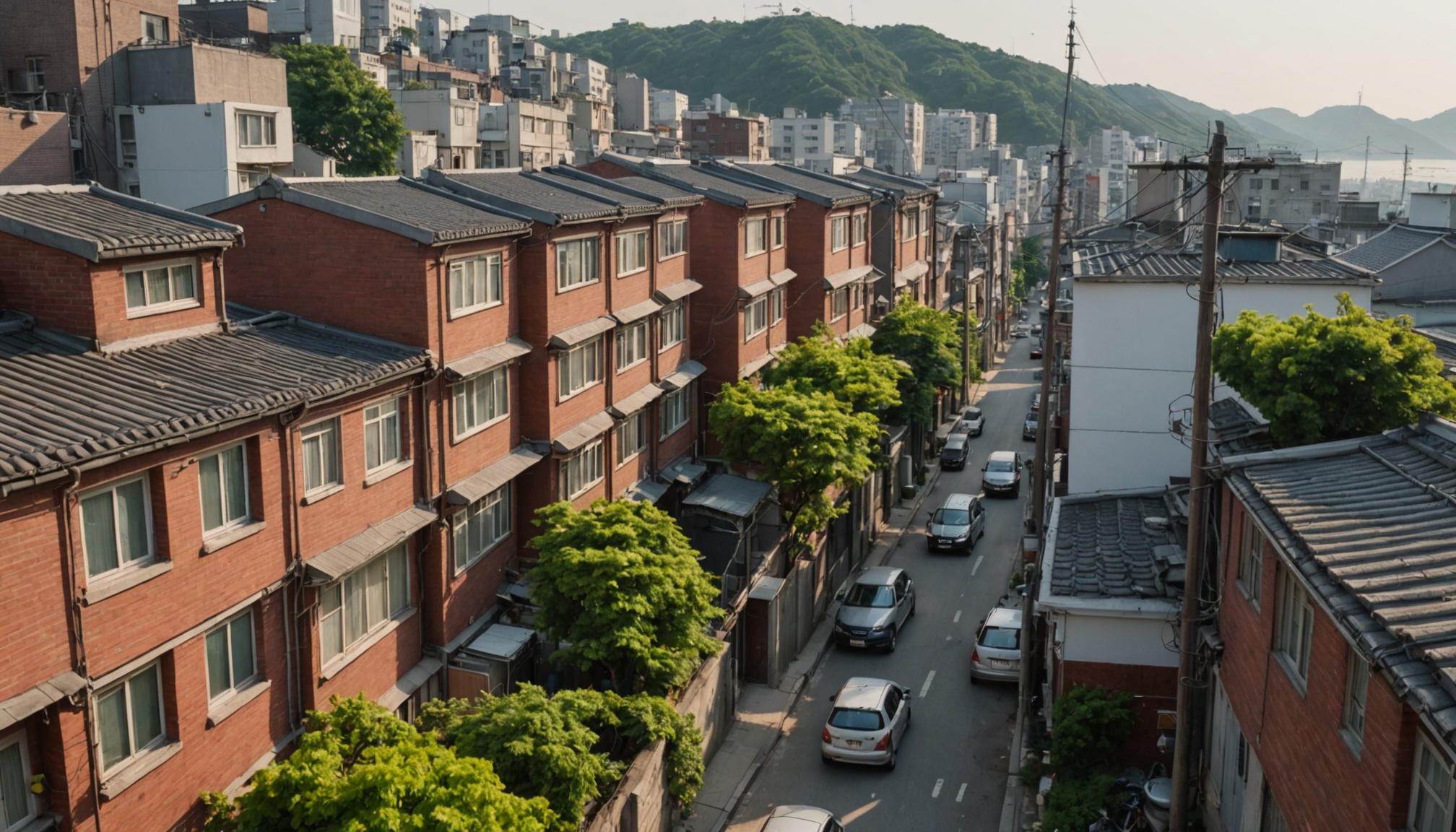
From 27 February 2026, the consent rate needed to establish a cooperative for a garo housing redevelopment project — small-scale renewal of a single street block — fell from 80% of landowners to 75%. Small-scale reconstruction dropped from 75% to 70%, and small-scale redevelopment fell from 80% to 75% alongside garo projects: a 5 percentage point cut across the board. In a scheme that already skips district designation, safety diagnosis and a preparatory committee, the remaining gate was always the consent forms — and that gate moved down one notch.
Which blocks qualify
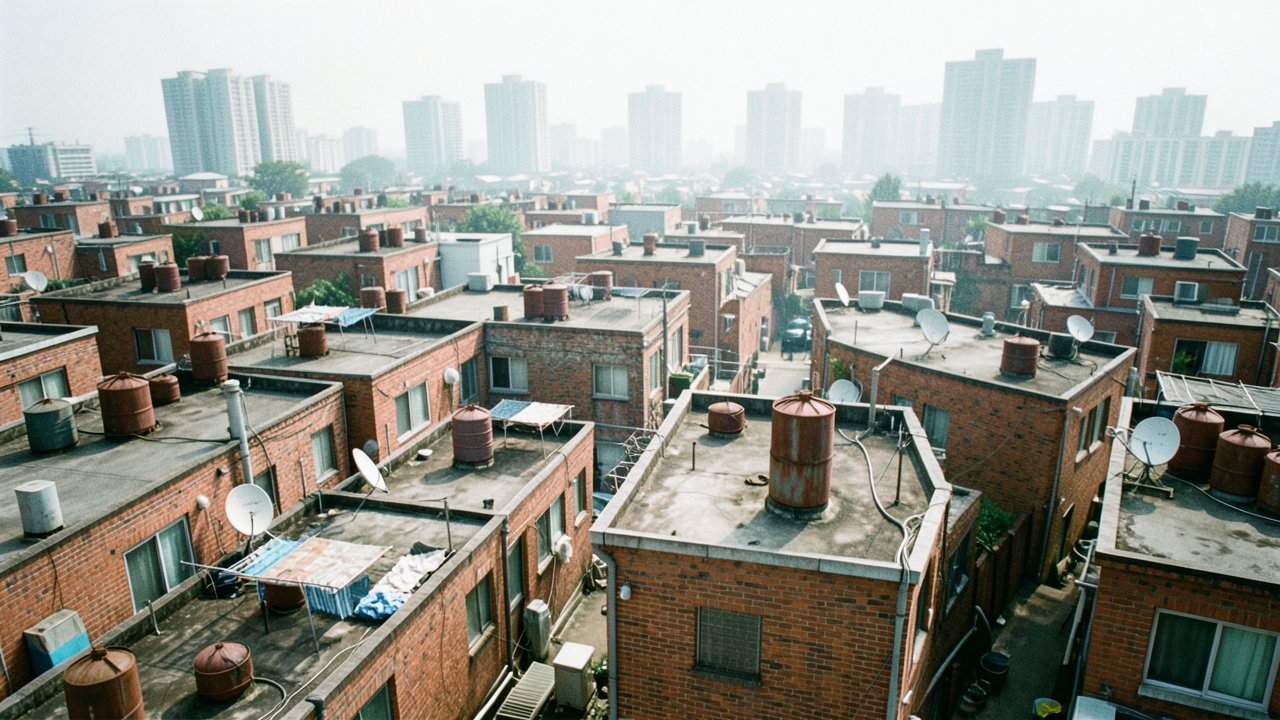
According to guidance from the Seoul Metropolitan Government, four conditions apply at once. First, the block must be under 13,000㎡ and enclosed by planned city roads or roads at least 6m wide. Second, no planned city road wider than 4m may pass through it — if a road cuts the block in two, the premise of renewing housing while preserving the existing street grid no longer holds. Third, the project implementation area itself must be under 10,000㎡. That the block ceiling (13,000㎡) and the implementation ceiling (10,000㎡) are different numbers is a routine source of confusion.
Fourth comes housing count and building age. Detached houses alone must number at least 10; multi-household units alone at least 20; a mix of both at least 20. The threshold for deteriorated buildings is recorded differently across sources. Seoul's redevelopment information portal states two-thirds or more of all buildings, while the city's housing guidance page puts it at 60% or more of buildings within the implementation area. The gap exists because the statutory standard can be relaxed by municipal ordinance, so the real answer starts with the district ordinance and the responsible department.
What does a 5-point cut mean in actual households?
In percentage terms it is five points; on the ground it is a number of signed forms. Calculating the households needed by block size gives the table below. Because the requirement is "at or above", fractions are rounded up.
| Owners in block (households) | Under old 80% rule | Under new 75% rule | Forms no longer needed |
|---|---|---|---|
| 20 | 16 | 15 | 1 |
| 30 | 24 | 23 | 1 |
| 40 | 32 | 30 | 2 |
| 60 | 48 | 45 | 3 |
| 100 | 80 | 75 | 5 |
A 20-household block needs one fewer form; a 100-household block, five fewer. The figures look small, but small-scale projects usually stall on exactly those last few households — owners who cannot be reached, properties fragmented by inheritance, landlords protecting rental income. A second requirement runs alongside it: cooperative establishment also needs consent covering two-thirds or more of the land area, so a single large parcel in opposition can block the project even when the headcount is met.
How it differs from ordinary reconstruction
Garo projects move faster not because the procedure is compressed but because the front half is absent. District designation, safety diagnosis and preparatory committee formation all drop out, and the process begins at cooperative establishment. Project implementation approval and the management disposal plan can also run in parallel. Seoul's information portal puts the typical duration at three to four years on average.
| Stage | Redevelopment/reconstruction (Urban Renewal Act) | Garo housing project |
|---|---|---|
| District designation | Required | Skipped |
| Safety diagnosis | Required for reconstruction | None |
| Preparatory committee | Required | Skipped |
| Consent for cooperative | Per governing statute | 75% of owners + 2/3 of land area |
| Implementation approval / disposal plan | Sequential | Can run together |
| Site size | No limit | Under 10,000㎡ |
The price of a shorter procedure is scale. The 10,000㎡ ceiling keeps complexes small, which weakens the ability to absorb project costs through general sale units. Housing Herald reported that the amendment explicitly bars combined projects from exceeding the size limit applying to an individual project — a clause designed to stop developers routing around the ceiling into mid-size development.
Once the procedure has been stripped down, the remaining variable is viability. Consent rates open the door; floor area ratio and sale prices decide what is behind it.
Two levers on viability: purchase price and floor area ratio
Alongside the consent rate, the acquisition price for rental housing changed. Per Kyunghyang Shinmun, the price at which public bodies buy rental units was reset to about 80% of the basic construction cost — roughly 1.4 times the previous standard construction cost benchmark — and construction cost movements now feed through every six months instead of every three years. The more a cooperative receives for the rental units it supplies, the better the project's arithmetic. The same amendment widened floor area ratio exceptions, extended building coverage relief beyond sloped sites, and folded landscape and traffic impact assessments into the integrated review.
Seoul added its own incentives on top. According to Kyunghyang Shinmun, the city applies a ceiling floor area ratio of up to 400% for Moa Housing and Moa Town projects, rising to the statutory maximum of 500% where purchased rental housing is supplied as well. The rule capping average height at 13 storeys in Class 2 general residential zones has been deleted, and block-scale projects can now be planned as mid- to high-rise without a storey limit. Transit incentives apply where at least half the site sits within 350m of a subway platform; arterial road incentives where the site fronts a road 20m or wider. The obligation to open public facilities in exchange for incentives has been removed.
Housing count and resale restrictions belong in the same view
Supply conditions carry limits too. Seoul's guidance states that at least as many units as previously existed must be supplied, capped at two units per owner, with units of 60㎡ or less subject to a three-year resale restriction. Cooperative membership status and taxation follow the same structure as ordinary renewal projects, so the difference between occupancy rights and pre-sale rights in capital gains rates and housing counts and the resale restriction periods by region and type both need checking before any disposal is calculated. Cash settlement for owners who withhold consent proceeds separately after the cooperative is established.
What to check
- Area — verify both numbers separately: block under 13,000㎡, implementation area under 10,000㎡
- Through roads — whether any planned city road wider than 4m crosses the block
- Deterioration threshold — whether the district ordinance says two-thirds or 60%, and whether it is measured over the block or the implementation area
- Land area consent — whether two-thirds of land area is secured even once 75% of owners have signed
- Incentive conditions — distance within 350m of a subway platform, frontage on a road 20m or wider, and whether purchased rental housing is planned
- Supply terms — the two-unit cap, and when the three-year resale restriction on units of 60㎡ or less starts running
- Rental acquisition price — the date at which the basic construction cost benchmark was reflected in the project plan (updated every six months)
References
- Consent rates eased for small-scale renewal, rental acquisition prices raised (Kyunghyang Shinmun)
- Consent rates cut: small-scale reconstruction to 70%, garo projects to 75% (Housing Herald)
- Guide to garo housing redevelopment projects (Seoul Metropolitan Government)
- Garo housing renewal: overview and procedure (Seoul redevelopment information portal)
- Seoul offers sweeping floor area ratio incentives for aging low-rise districts (Kyunghyang Shinmun)